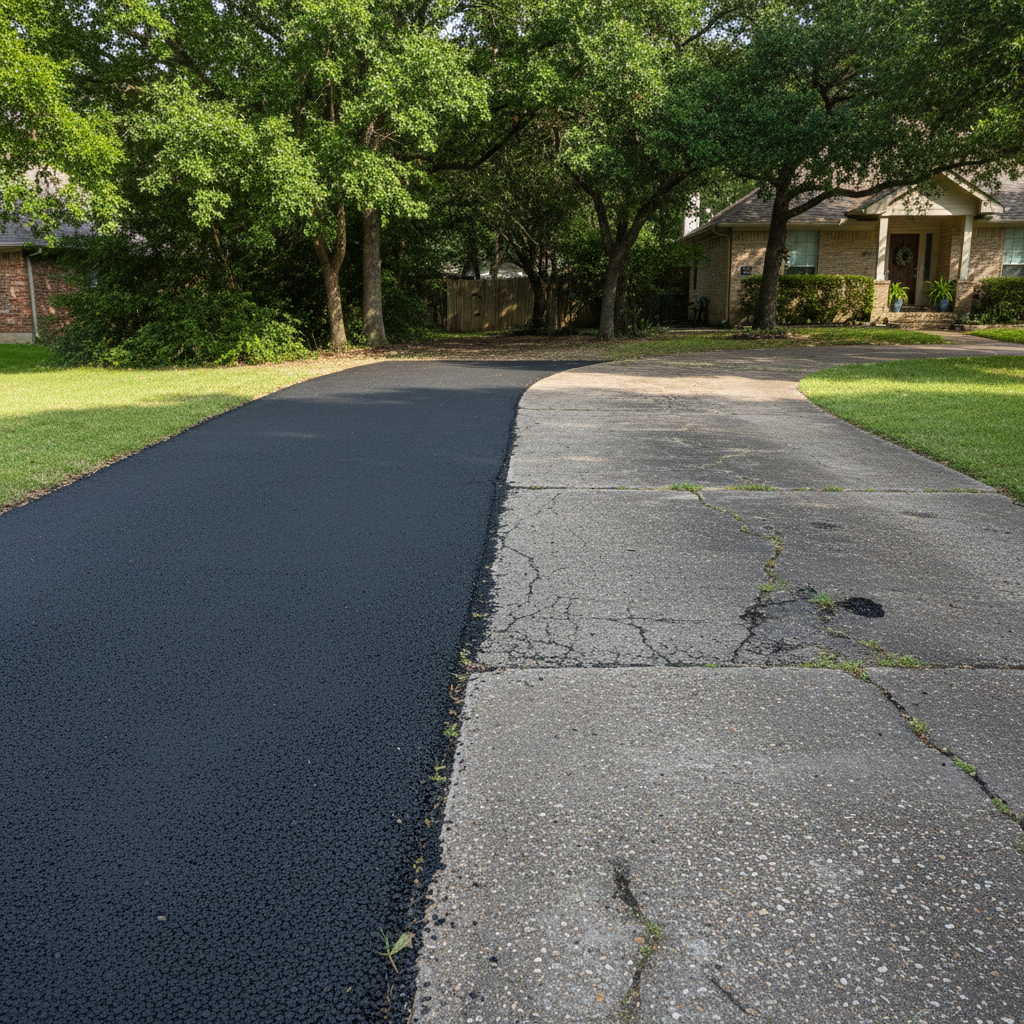
Alright, let's talk about those ugly cracks and potholes popping up on your asphalt driveway. It's not just an eyesore; it's a trip hazard and, left alone, it'll just get worse. When it comes to patching, you've mainly got two solid options: infrared asphalt repair or the more traditional saw-cut and remove method. As someone who's been laying asphalt around Arlington for years, I've seen both done well and, frankly, done poorly. Let's dig into what each means for your home.
Infrared Asphalt Repair: The Quick Fix
Infrared patching is pretty neat technology. Basically, we use a specialized infrared heater to soften the existing asphalt around the damaged area. Once it's pliable, we rake it up, add some new, fresh asphalt mix, and then compact it all together. The idea is that you're fusing old and new asphalt, creating a seamless patch.
- Cost: Generally, this is your cheaper upfront option. It's less labor-intensive and uses less new material. If you've got a bunch of smaller, isolated spots, infrared can be very cost-effective.
- Durability: This is where it gets a bit tricky. When done right, by someone who knows what they're doing and uses the right equipment, an infrared patch can hold up pretty well. The key is proper heating and compaction. However, if the base layer underneath is already compromised, or if the original asphalt is really old and brittle, you're essentially putting a band-aid on a deeper problem. It might look good for a while, but it could fail prematurely.
- Maintenance: Not much different than any other asphalt – keep it clean, sealcoat it every few years. The main thing is watching for the patch to show signs of failure, which could mean the original problem wasn't fully addressed.
- Appearance: This is where infrared can really shine, visually speaking. Because you're reheating and blending the existing asphalt, the patch can be very seamless. You don't get those distinct lines you see with cut patches. It can look like the damage never happened.
Saw-Cut & Remove: The Gold Standard
Now, the saw-cut and remove method is what I'd call the tried-and-true, more robust approach. We'll use a saw to cut out a neat, rectangular section around the damaged area, making sure to get past all the compromised asphalt. Then, we remove all that old material, prepare the sub-base if needed, apply a tack coat, and finally, lay down fresh, hot asphalt mix. We compact it thoroughly, making sure it's level with the surrounding pavement.
- Cost: This option is typically more expensive. You're using more labor, more new material, and there's more waste disposal involved. It's a more involved process from start to finish.
- Durability: This is where saw-cut and remove excels. By completely removing the damaged section and replacing it with new, properly compacted asphalt, you're getting a much stronger, longer-lasting repair. You're not relying on blending old, potentially weak material. This method addresses the problem more comprehensively, especially if the damage goes deep. Here in Arlington, with our clay soils and the way they expand and contract with our crazy weather, a solid, deep repair is often what you really need to prevent issues from popping right back up.
- Maintenance: Just like any other asphalt, regular cleaning and sealcoating will extend its life. Because it's a more durable repair, you'll likely spend less time worrying about that specific patch failing again.
- Appearance: You'll definitely see the lines of the patch. We cut neat, straight lines, so it'll look like a clean, rectangular repair. It's not as seamless as a perfectly executed infrared patch, but it looks professional and shows that a proper repair was done.
So, Which One Should You Choose?
Look, both methods have their place. If you've got some very minor, superficial cracking, or a small pothole that just appeared and the underlying base is solid, infrared can be a decent, budget-friendly option. It's quick, and it looks great immediately.
However, if you're asking me, for most homeowners in Arlington dealing with significant cracks, potholes, or areas where the asphalt is really deteriorating, I'm almost always going to recommend the saw-cut and remove method. It's the more permanent fix. It addresses the root cause better, especially with our Texas weather cycles and how they affect pavement. You might pay a little more upfront, but you're getting a repair that's going to last longer and give you fewer headaches down the road. You won't have to call us back at Arlington Asphalt Construction to fix the same spot again in a year or two.
Think of it this way: infrared is like putting a fresh coat of paint on a rusty fender. It looks good for a bit, but the rust is still there. Saw-cut and remove is like replacing the whole fender. It's more work, more money, but the problem is gone for good.
Ultimately, the best thing to do is have a professional come take a look. We can assess the extent of the damage, check the sub-base, and give you an honest recommendation based on your specific situation and budget. Don't just pick the cheapest option without understanding the long-term implications.